

War and Chips. And the KMT.
[Opinion] Once atop an authoritarian dictatorship, the KMT's role in maintaining peace, and keeping the chips flowing, is of increasing importance.

Good Evening from Taipei,
Cheng Li-wun may be one of the world’s most pivotal politicians. Not forever. Perhaps not for long. But at least for now.
I’ve long held the belief that people don’t care about other people’s domestic politics. Except for the US; everyone cares about US politics. Taiwan’s domestic machinations used to fit that mold of being unimportant to anyone but locals.
Not anymore.
The US, and the entire world, will be impacted by decisions that Taiwanese people, and their leaders, make over the next decade. That’s because the country sits uniquely at the nexus of supply chains, great-power rivalry, shifting trade routes, and energy demand.
What may look like mere domestic affairs will impact Taiwan’s ability to shape its own future, and as a result the future of global manufacturing. And that’s before considering outward-facing policies such as industrial development, foreign relations, and military procurement.
If things go awry in Taiwan, it won’t just be the world’s supply of leading-edge chips that go up in smoke. The flow of AI servers will grind to a halt, and the management & logistics of industries spanning shipping, shoes, golf clubs, plastics, bicycles, yoga pants, and military hardware will get stuck. It’ll be like the Ever Given blocking the river of global trade, with no tugboat in sight.
That’s why Cheng’s role is more important than perhaps she herself realises. Her power comes not from who she is as a person, but whom she represents: Taiwan’s Kuomintang.
Rich Party, Poor Party
Once the world’s richest political party, the KMT’s heft has atrophied over the past quarter century. It went from being the authoritarian leader of a single-party state to leaning on an upstart political party just to gain slim control over Taiwan’s legislature.
By the end of the current presidential term in 2028, the KMT will have held the top executive role for just eight years since the turn of the century. The incumbent Democratic Progressive Party, in office since 2016, will have been in power for the other twenty.
A graduate of the prestigious National Taiwan University Law School, Cheng Li-wun went on to postgraduate studies at Temple University in the US before earning a Master’s Degree at Cambridge University.
The most important line on her resume, though, came just a few months ago when she was elected Chair of the KMT.
Now Cheng has the task of herding the cats of the KMT within the legislature and the party at large. The direction the KMT takes matters a lot because not only does it offer the only viable alternative to the policies of the DPP, but it signals to the outside world what possible paths the country itself might take.
The KMT needs to give the Taiwanese people a good reason to put them back in power, but it cannot ignore the reality that the world is watching how it manages relations between two great powers.
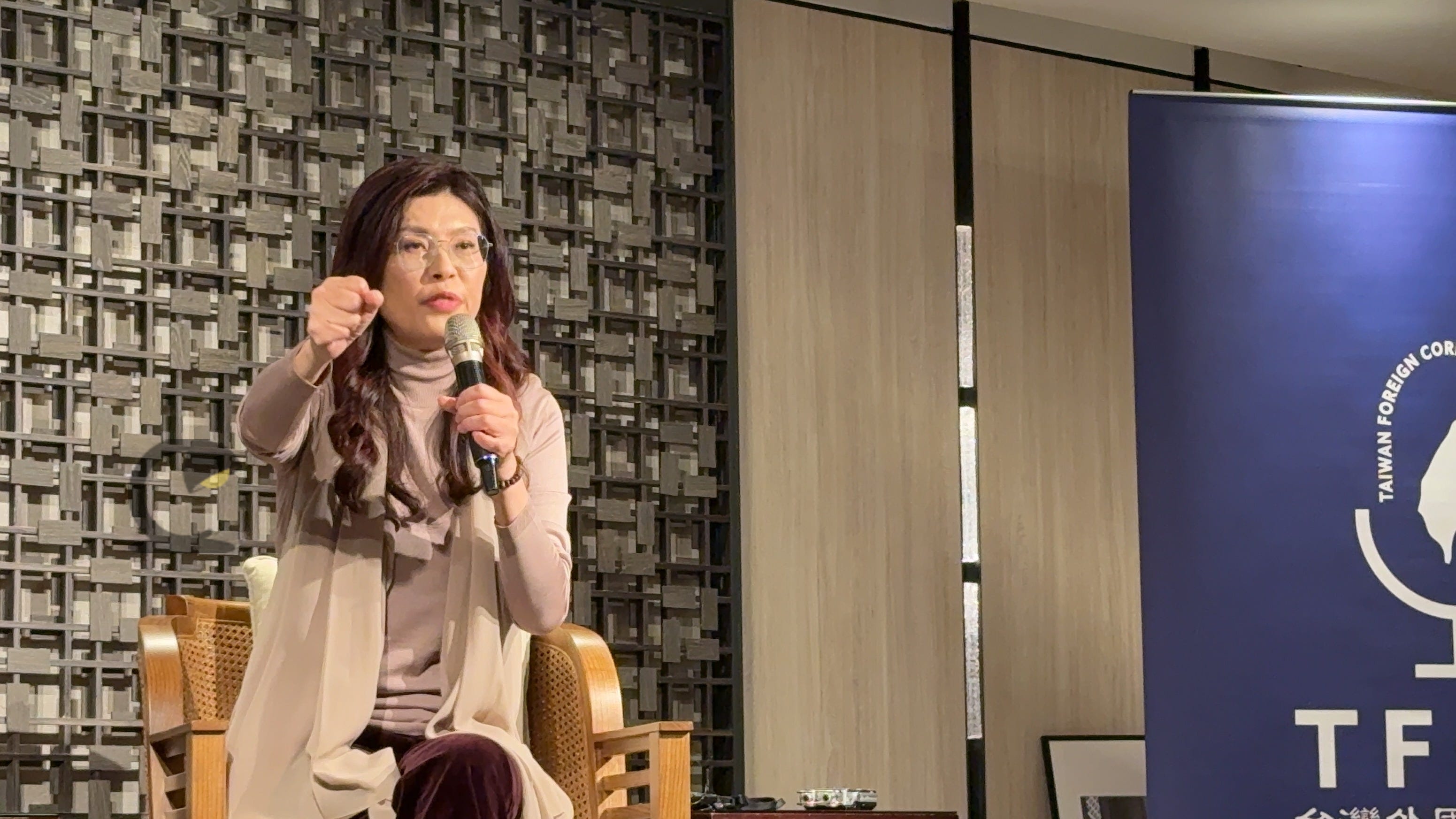
A comment from Cheng to the Taiwan Foreign Correspondents’ Club this week encapsulates that tension.
“The Kuomintang has long maintained very good relations with the United States. This will not impact our efforts to improve relations with the mainland,” Cheng said.
On the surface, this looks like great diplomacy. We’re everybody’s friend, she seems to be saying, so we’re going to play both sides.
But it’s also either woefully naive, or a show of political cunning. No matter how much Taiwan, or anyone else, wants to try to be besties with both Beijing and Washington, the reality is far different.
On the surface, for matters that don’t actually matter, this may be possible. For substantive issues it’s entirely impossible.
When Washington puts pressure on Taiwan to boost military procurement, Beijing will put even more pressure on Taipei not to. If Beijing urges Taiwanese to invest more in Chinese industry, including chip fabs, you can be sure Washington will step in. In this neo Cold War, those who try to sit on the fence are sure to fall off.
Yet, actually sitting on the fence and merely appearing to sit on the fence are two different things. Right now Cheng is not in power, as she was at pains to point out to that crowd of foreign journalists and diplomats on Monday, so she has plenty of freedom to try and placate both sides. This tactic may not appease both Bejing and Washington, but it won’t upset them either.
More importantly, she gets to play to all sides of Taiwan’s political spectrum — those who are fearful of, and those who are friendly toward, each of China and the US. In so doing, she keeps the KMT’s chances of survival, and possible presidential revival, alive.
And she needs to. Put simply, all three nations — Taiwan, the US, and China — need the KMT to remain a viable force in Taiwan politics.
Failing to do so could lead to disaster, and very possibly World War III. That’s not to mean the KMT is required to actually be in power. In fact, many rightfully fear that the KMT will once again trade the interests of Taiwanese people for closer ties to Beijing. The party moved in that direction once and got swiftly flogged for it. The result was a lost decade for the KMT where there were few guardrails against the DPP’s agenda.
This period commenced in 2014 when the Sunflower Movement popped up in opposition to incumbent president Ma Ying-jeou’s opaque policies on trade and investment with China. It ended when Tsai’s term concluded and her VP Lai Ching-te kept the DPP in power but lost the legislature to a KMT-led coalition.
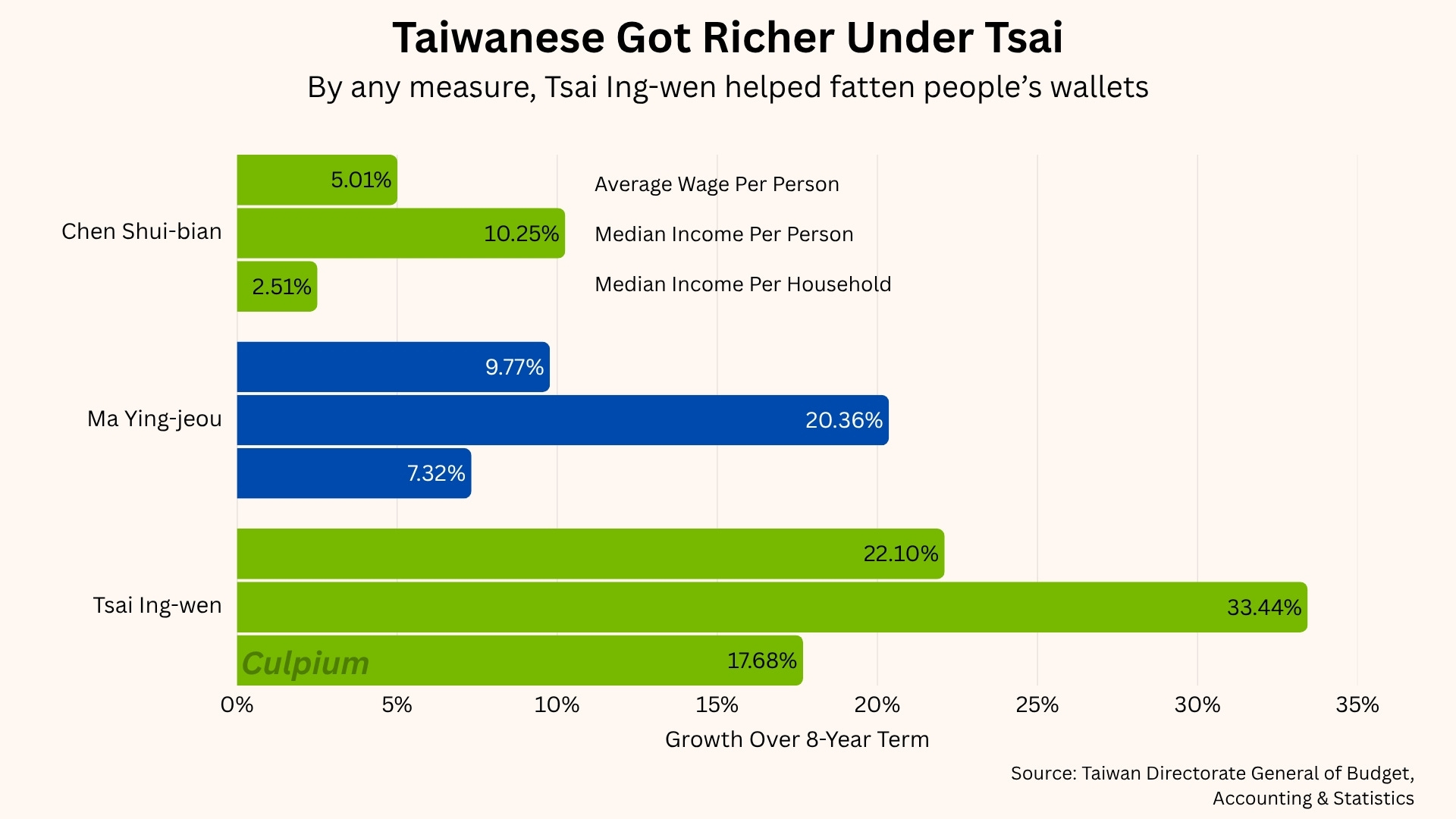
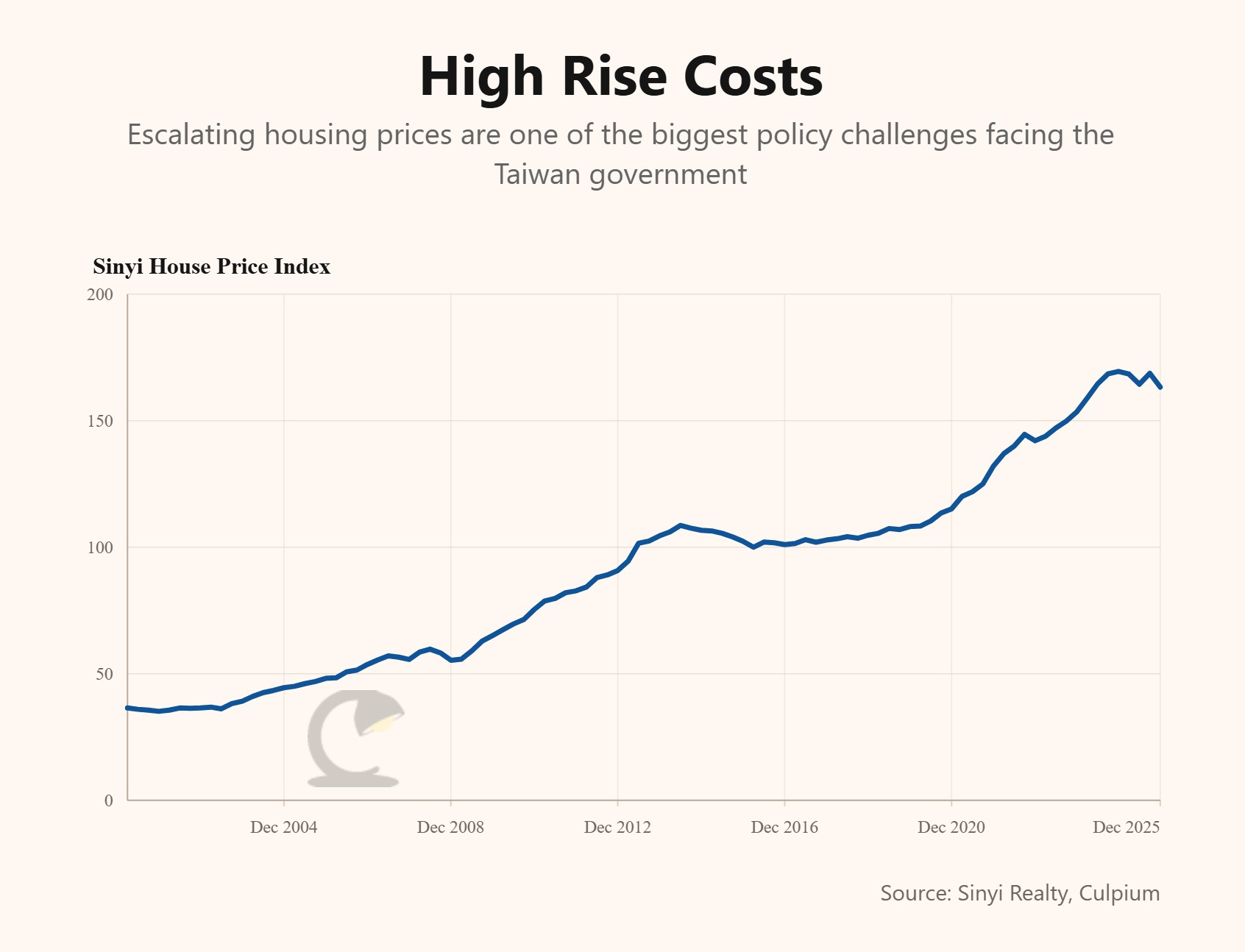
Tsai’s eight years as president were largely good for the country both domestically and internationally. Wages grew, the people got through Covid without a single lockdown, and more nations started standing up for Taiwan in the international arena. But escalating housing prices and a low birth rate became particularly notable concerns, while longer-term issues like energy and military security were not adequately addressed.
As a result, the KMT’s power has rebounded and the shine has gone off Tsai Ing-wen’s presidency. Whether the KMT or the DPP has the better policies, it’s not at all healthy for a democratically elected leader to govern against a weak and ineffectual opposition. The KMT’s survival also helps ensure the legitimacy of the DPP.
The US also needs the KMT to be viable, despite it not appearing that way right now. The party was once Washington’s bff in Asia. Secretary of State Marco Rubio’s recent comment that the US is “going to unleash Chiang on these people” — meaning Iran’s leaders — was a reference to the 1950s policy (or threat) of using Chiang Kai-shek to attack Mao’s Communists.
Recently, though, the KMT just seems obstructionist. It’s stood in the way of the DPP’s attempt to bolster Taiwan’s military capability while at the same time being a bit too eager to cozy up to Beijing.
On the flipside, Lai Ching-te has offered Washington reason to be wary since he’s eschewed the measured tone taken by his predecessor. I see his recent speeches, including one labeling China a hostile foreign power, more akin to the rhetoric of the DPP’s first president Chen Shui-bian — whom the US didn’t much like. If the KMT can slow its sprint toward Beijing to a mere jog, and embrace the notion that Taiwan probably needs to spend a lot more to boost its national security, then Washington and the KMT can rekindle their friendship.
Saving Face
Then there’s China.
I won’t brook the notion that Taiwan is provoking China to attack. The People’s Republic of China is an independent sovereign nation. Its leaders have full agency over whether or not they launch a military strike against 24 million people who pose no threat. The only reason to do so is to save face. Because allowing Taiwan to be recognized for its own independent sovereignty would be an admission that the CCP failed in its decades long quest to defeat the KMT and extinguish the Republic of China — and thus complete its takeover of “China.”
But it’s naive to believe Beijing will act reasonably. And that’s where the KMT comes in.
For as long as the Chinese Nationalist Party (the literal translation of “Kuomintang”) exists, then the CCP can keep fantasizing about peacefully bringing Taiwan under the PRC umbrella. The death of the KMT, or its lack of viability, removes that pretence. All that would be left is a DPP keen to certify Taiwan’s independence. (And the Taiwan People’s Party, which is barely hanging onto political relevance and would not get away with a swift move toward unification.)
The KMT’s Cheng, while well-educated, is probably not a viable long-term leader of the party as it advances toward the next presidential election. But she fits the role that the KMT needs of her, and which Taipei, Washington and Beijing need someone to play. That is, to moderate the DPP while ensuring Beijing feels it has a friend on the other side of the Taiwan Strait.
Without the KMT, Beijing would have no peaceful political path toward unification. That would in turn reduce the argument made by the CCP’s more moderate factions to hold off on a military solution and continue pursuing political dialogue.
Time and again Cheng makes comments which make me wonder whether she’s politically simplistic, intellectually vapid, or strategically sly.
The Trump Frenemy Playbook
She has indicated that part of her plan to secure peace would be to first visit Chinese leader Xi Jinping before heading to Washington. It feels like she’s taking a leaf from President Trump’s playbook — coddle your nation’s enemies and deprioritize your allies.
”I believe that the other side hopes to resolve cross-strait issues peacefully,” she told the TFCC on Monday. Maybe she’s right, but she’s ignoring the fact the only resolution Beijing seems willing to accept — Taiwan under the PRC’s umbrella — is one which Taiwanese abjectly reject. Meanwhile, Beijing has made clear it’s more than willing to “resolve” the issue by killing an untold number of Taiwanese, who pose no threat to the people of China.
Then there’s the KMT’s grasp of the one issue which truly matters to rest of the world: semiconductors.
At that TFCC event on Monday I asked Cheng whether she thinks the US is hollowing out Taiwan’s chip industry — a growing concern among Taiwanese — and what role she thinks the tech sector should play in securing its national security.
“Taiwan, including its semiconductor industry, must have a global footprint. Therefore, TSMC cannot have all its R&D centers and manufacturing facilities solely in Taiwan. A global presence is essential,” Cheng responded. “Everyone agrees that TSMC’s most advanced and core technologies must remain in Taiwan. This issue can be discussed at a national security level. As for other aspects, a global footprint is necessary.”
That’s a lot of words. But not a lot of substance, and not quite correct. I’ll admit that I’m biased. Technology and semiconductors are my beat, and I asked the question. Yet since technology is so important to Taiwan and the world, I expected the leader of the opposition to have a clearly enunciated policy.
But that’s kind of the role the KMT, and Cheng, is playing right now. They’re offering something for everyone, a buffet of policies, without being pinned down on anything. It’s clear to Taiwanese voters which flavors the KMT favors — less military spending, closer trade and political ties with China, and an eventual path toward Taiwanese being subjects of the PRC. That’s in the KMT’s DNA.
So naturally, those wary of the KMT’s stance on China see Cheng as kowtowing to Beijing. Yet those who believe Taiwan is too enamored with the US feel she’s a little too conciliatory toward Washington.
That sounds oxymoronic in light of my earlier observation that she’s trying to appease all sides. Not necessarily: she’s giving those who want to believe in the KMT something to cling to, betting that these “wannabe believers” outnumber the absolute naysayers who’d never vote KMT anyway.
If true, what this means for war and chips is that the KMT is needed. Perhaps as the party of power, perhaps as the perpetual opposition. But in either role, the KMT can keep admiring the Chinese Emperor’s new clothes — allowing Beijing to keep believing that unification is a possibility.
For as long as that happens, the world will keep enjoying its leading-edge chips, and AI servers, and yoga pants, and bicycles. And peace.
Thanks for reading.


I thought Cheng's answer to your question would be unusable ... But you found a use for it! Semiconductors based on her "report" to us didn't really figure, so it would seem to follow that she doesn't have a nuanced view.
Let's be real. Taiwan's domestic politics has no bearing on the CCP's calculus. It knows that Taiwan's politics are deeply divided and fickle. Even if the KMT climbs back to power in 2028, they wouldn't have the will or the political juice to push for reunification domestically, and even if they did the US wouldn't let them. Meanwhile, the status quo is making Taiwan drift further and further away from China's orbit.
The CCP will act if or when it feels it can box out any of its remaining dependencies on the US, regardless of who's in power in Taiwan. Under that scenario, Taiwan's domestic politics would only matter for the smoothness of the transition to Chinese rule.
If the CCP was irrational, it would blow up all of Taiwan's ports tomorrow and starve it out to surrender. But it won't do that precisely because it is rational within China's nationalist framework. The only thing it wants more than Taiwan is for China's own trajectory to global primacy to not be derailed by adventurism.
In the mean time, Taiwan can buy all of the US arms it wants -- it won't make any difference when it comes down to it. The only thing that matters is how far the US is willing to go if and when the CCP moves to change the status quo.