

Washed Wafers vs Washed Cutlery, TSMC Braces for Drought
[Exclusive] Low rainfall forces chipmaker to escalate water-management protocols.

Good Evening from Taipei,
TSMC has swapped metal cutlery for disposable plastic in its dining rooms, shut a swimming pool, and curtailed access to gymnasium showers in response to Taiwan’s driest winter on record, my sources tell me.
The restrictions were announced and rolled out over the past week after Taiwan’s Water Resources Agency pointed to low water levels at key reservoirs in the nation’s north, I am told. Production is unaffected and the move is a precautionary measure as Taiwan waits out an especially water-starved dry season in the hope that plum rains, usually in May, fill the country’s water stores.
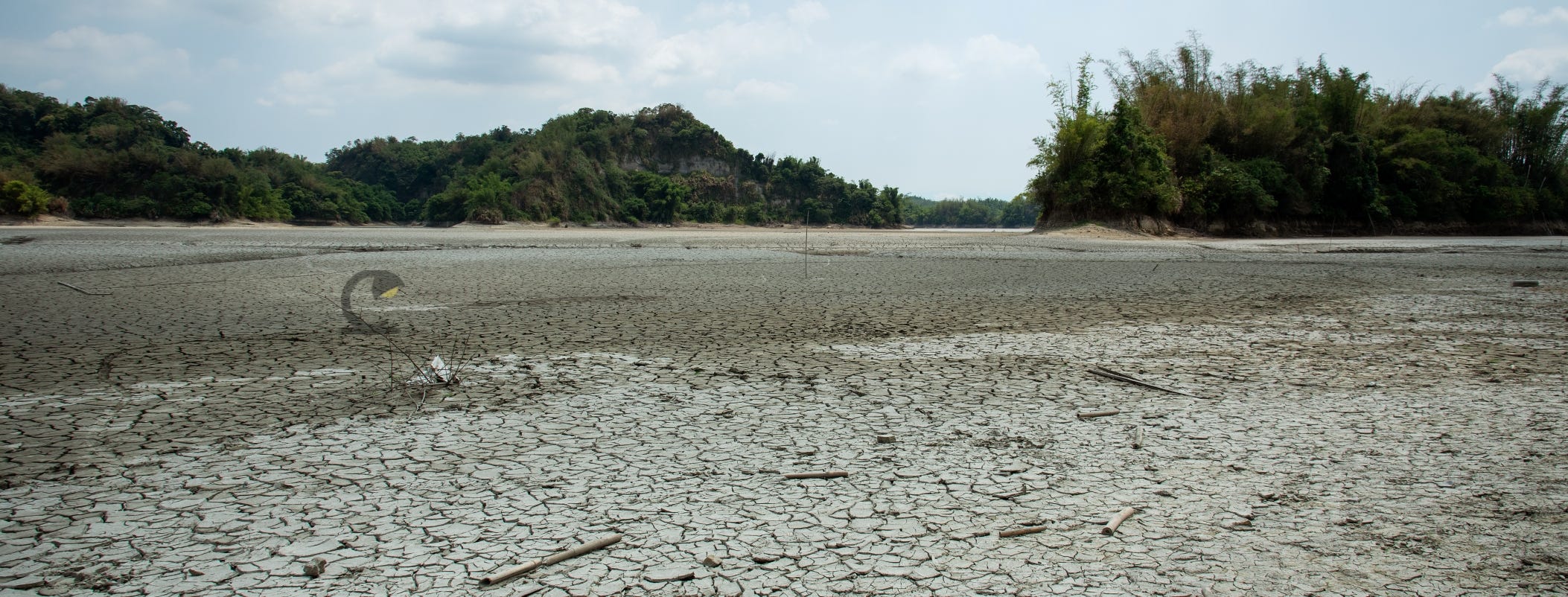
Rainfall in the northern region which includes Hsinchu, location of TSMC’s HQ and eight fabs, has been around 25% below the historic average over the past five months, spurring the WRA to raise its water alert for the region to yellow on March 12, Taiwan’s Central News Agency reported last month. Taichung, in central Taiwan where TSMC also has facilities, had its alert raised to green last week.
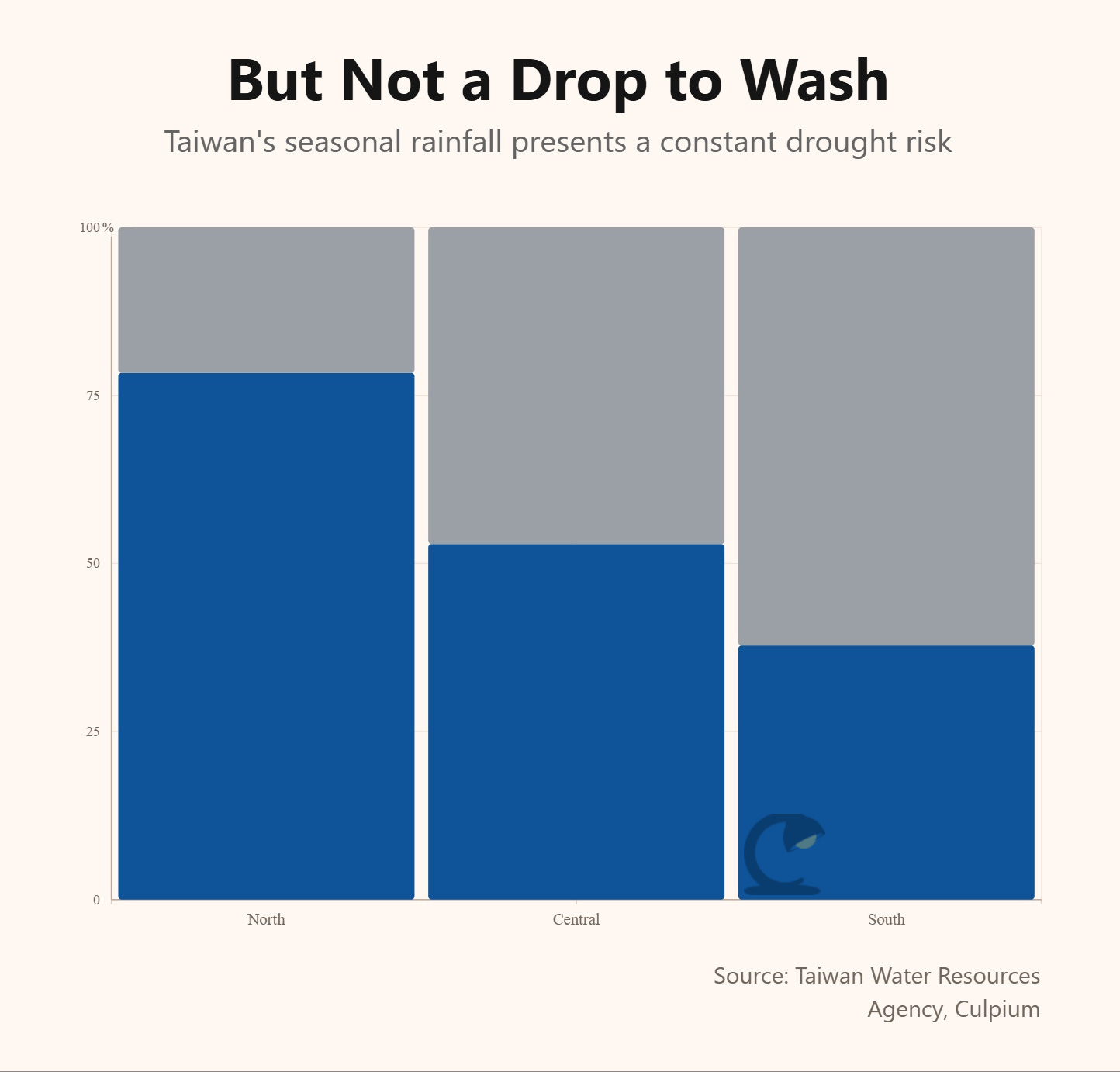
Taiwan uses a four-light alert system ranging from green (warning) through yellow (reduced water pressure), orange (reduced water supply), and red (water rationing). Almost 80% of Taiwan’s annual rainfall comes in the months of May through October, with December and January the driest, according to the WRA. As a result, the country starts bracing for shortages by March if the previous wet season was below average and the subsequent dry season failed to make up for the shortfall.
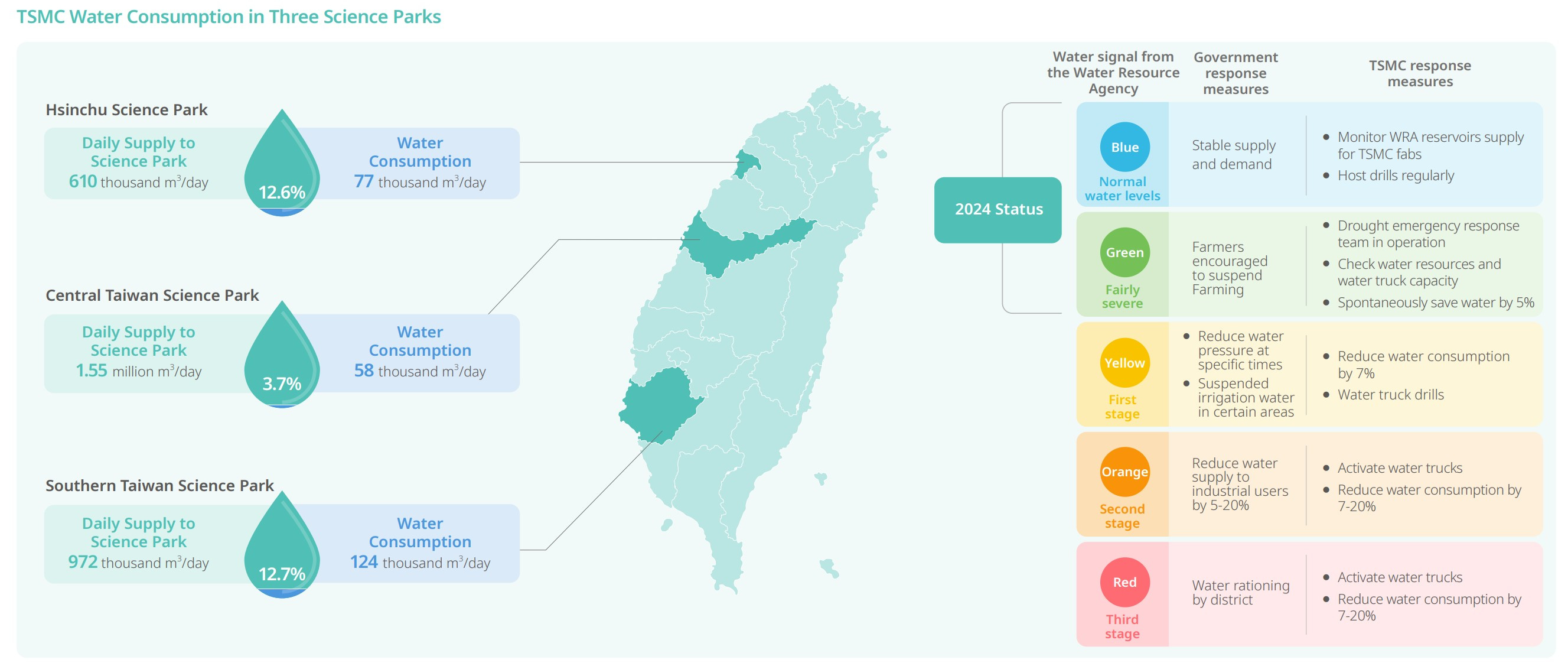
TSMC’s water management protocol, including temporary restrictions for non-manufacturing usage, tends to follow the government’s alert system. While the situation at Taiwan’s northern basins remains healthy, the water level at the Second Baoshan reservoir, a key source of water for the Hsinchu Science Park, is currently below 22%. Low reserves in the center and south are more acute, data shows.
“In response to the light stage of water pressure reduction, TSMC’s facilities within Hsinchu Science Park have put conservation measures in place including: decrease water discharge from the system, reduce facility water consumption, increase wastewater recycling of facilities, improve water production rate of the system, and other relevant water management actions,” TSMC told Culpium in a statement. “We do not expect water conditions to have a substantial impact on operations.”
In reality, TSMC’s measures are unlikely to have much impact on the company’s water usage, which was around 130 million metric tons — 52,000 Olympic-sized swimming pools — in 2024. Instead, the move can be seen as part of the company’s broader conservation strategy and efforts to be a good corporate citizen.
If significant rainfall doesn’t come soon, though, water restrictions could quickly escalate with direct and indirect consequences for production across the country.
More broadly, the current drought highlights the many challenges Taiwanese industry must overcome to keep production humming along.
The US attack on Iran, and subsequent retaliation against Qatar and closing of the Strait of Hormuz caused fears that supply of helium might dry up. Helium, the second-smallest and lightest of chemical elements, is used in chip production as a carrier gas and to cool equipment. Potential shortages have yet to materialize, with Taiwan’s government last week announcing that alternative supply from the US is available.
A bigger issue, though, is Taiwan’s vulnerable electricity supply. As TSMC expands, and Taiwanese manufacturers bring more capacity back from China, energy needs will continue to escalate. That demand is colliding with the government’s shutdown of nuclear power stations and bigger reliance on gas-powered generation.
Last month, however, President Lai Ching-te backed away from his party’s anti-nuclear stance by suggesting the government may be open to restarting Taiwan’s nuclear reactors. Lai’s Democratic Progressive Party has long held a ‘no-nukes’ stance in favor of renewables such as offshore wind, but higher demand from manufacturers plus a rollout of AI data centers has forced his administration to rethink that policy.
Thanks for reading.


