

AI Flash Boys, Pulling Wool, and China's Fight to Catch the US
[Opinion] Claims that China is on par with the US don't hold up as Trump prepares to discuss AI during his Beijing trip

Good Evening from Taipei,
Chinese AI models really aren’t as good as their US peers, despite claims on both sides to the contrary. That’s not just my assertion, but the view of many Chinese themselves. And they’re desperate to access the best models available.
After doing a backflip on banning Nvidia chip sales to China, AI will be among the items on Trump’s agenda when meeting with Chinese leader Xi Jinping this week in Beijing.
Catch the latest episode of Supply-Chained across all podcast platforms.
The disparity in both computing power and AI models has spurred a burgeoning industry of arbitrageurs in China who hunt down loopholes and flagrantly flout curbs to access models from OpenAI, Anthropic, and Google. It’s an industry driven by China’s lagging position and users’ desire to access something better.
Those exploiting this mismatch are not even trying to hide.
“Shattering commercial and geopolitical silos,” is the boast from B-AI, an outfit backed by Trump friend-turned-foe Justin Sun.
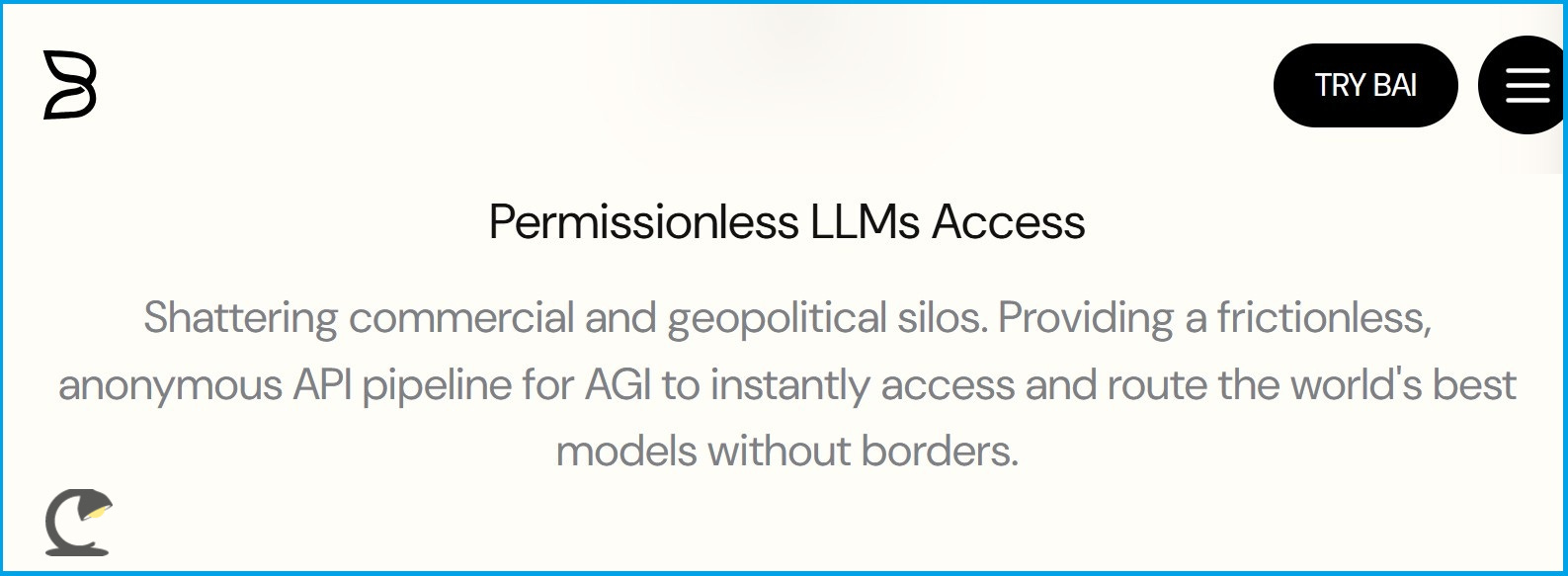
B-AI (白) is merely the latest in a long lineup of what Chinese call “transfer stations” — middlemen who take in AI requests from users and reroute them to US providers, then return the response.
The advantage is written clearly on their own websites. “No more worries about account bans/limits,” another transfer station called OneToken states plainly.
Writing for ChinaTalk, Qian Zilan — a research associate at the Oxford China Policy Lab — recently gave a detailed rundown on the mechanics of transfer stations titled How to Buy Cheap Claude Tokens in China. It’s well worth a read.
US companies’ curbs on using their models date back a few years. In July 2024, OpenAI cut off Chinese access to its Application Programming Interface (API) a few months after announcing that it “terminated accounts associated with state-affiliated threat actors.” An API allows programmers to send data directly to a server without the an interface wrapper such as a Website or mobile app.
As Kevin Xu of Interconnected Capital wrote at the time, “plugging the leaky API bucket is the next phase of AI model export control.”

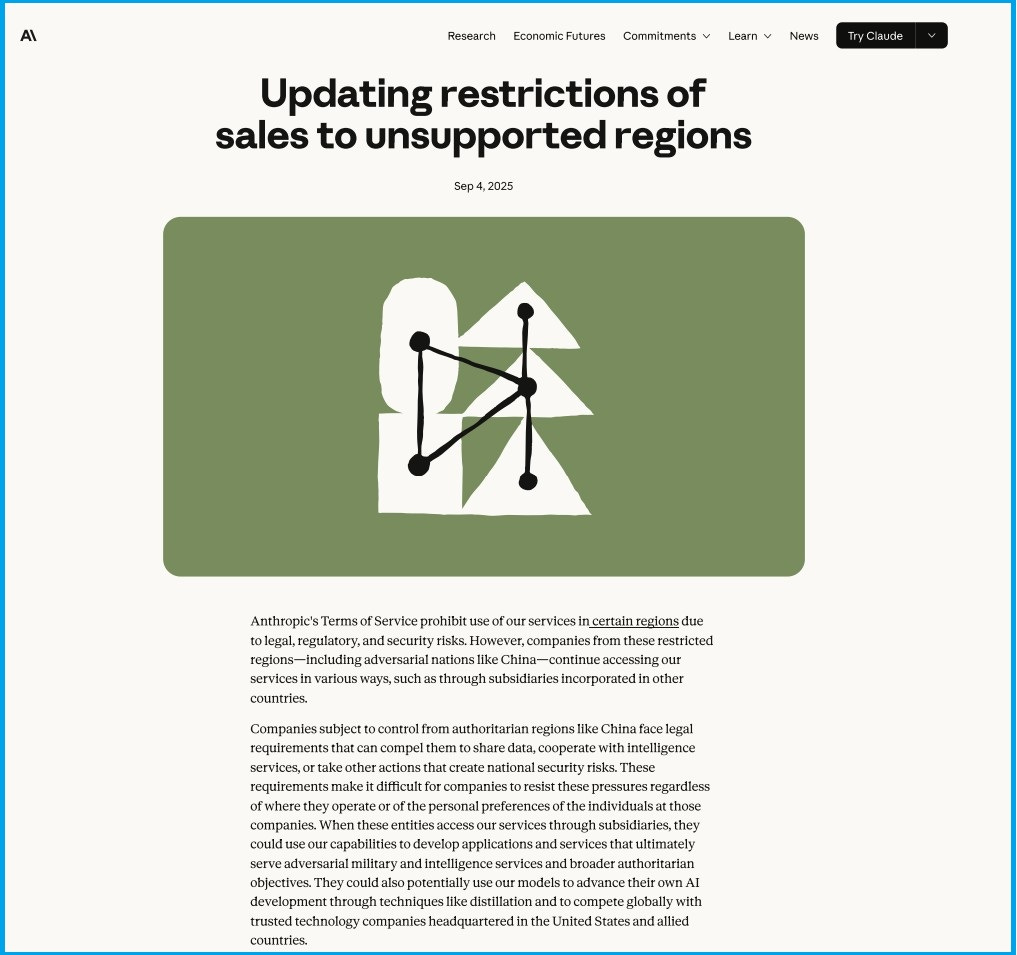
To be clear, these bans didn’t come directly from the US government, instead they’ve been largely imposed by the AI companies themselves. A year after OpenAI’s API curbs, Anthropic closed a loophole in its own rules by preventing Chinese-owned entities from using its models.
“Companies from these restricted regions—including adversarial nations like China—continue accessing our services in various ways, such as through subsidiaries incorporated in other countries,” it wrote at the time.
OpenAI and Anthropic have numerous reasons to want to boot Chinese from their platforms, beyond supposed concerns over national security. A major catalyst is allegations that rivals like DeepSeek are harvesting data from US providers and then distilling them down to create their own models. This has been lauded by many as an example of Chinese “brains” defeating American “brawn.”
Despite the supposed advantage brought by this innovation, Chinese AI providers still seemed pretty excited about Americans exiting their local market. Within hours of OpenAI’s 2024 announcement, Zhipu AI welcomed ChatGPT refugees to its platform with a “relocation plan.”
And yet, Chinese users don’t seem satisfied with local offerings, hence Xu’s prophetic view about ban-enforcement becoming a cat-and-mouse game. Wherever there’s strong demand, eager entrepreneurs will step in to offer supply.
AI Flash Boys
The result is a growing industry of what I call “AI Flash Boys.” The term Flash Boys was popularized by Michael Lewis in his best-selling book of the same name. By exploiting lags between the time an order is made and the time it’s placed on a stock exchange, high-frequency traders (HFTs) could intercept trades and front-run them.
Whenever a disparity exists in availability and access, an arbitrage opportunity arises. In Flash Boys, availability was the supply of market orders and access was the time at which someone could view them. HFTs had an advantage in when they could see and act upon a buy or sell request. Location is the most common form of arbitrage — a commodity bought and sold in disparate locations or exchanges offers a chance to trade both ends and pocket the difference.
The key to a profitable arbitrage strategy, though, is that the disparity must be both persistent and scalable enough to be worthwhile.
In China, the AI Flash Boys are benefiting from disparities in not only region, but price. And they’re exploiting local users’ escalating demand for the world’s best AI models.
The region issue is somewhat obvious, and arises from the ban imposed by service providers. If you can fake your location, then you can pretend to be non-Chinese. VPNs were once the primary method, but everyone has cottoned on to this approach and it rarely works. Beijing often tolerates VPNs, but has shown a willingness to shut them down. Likewise, Western providers regularly cut connections that come in via VPN.
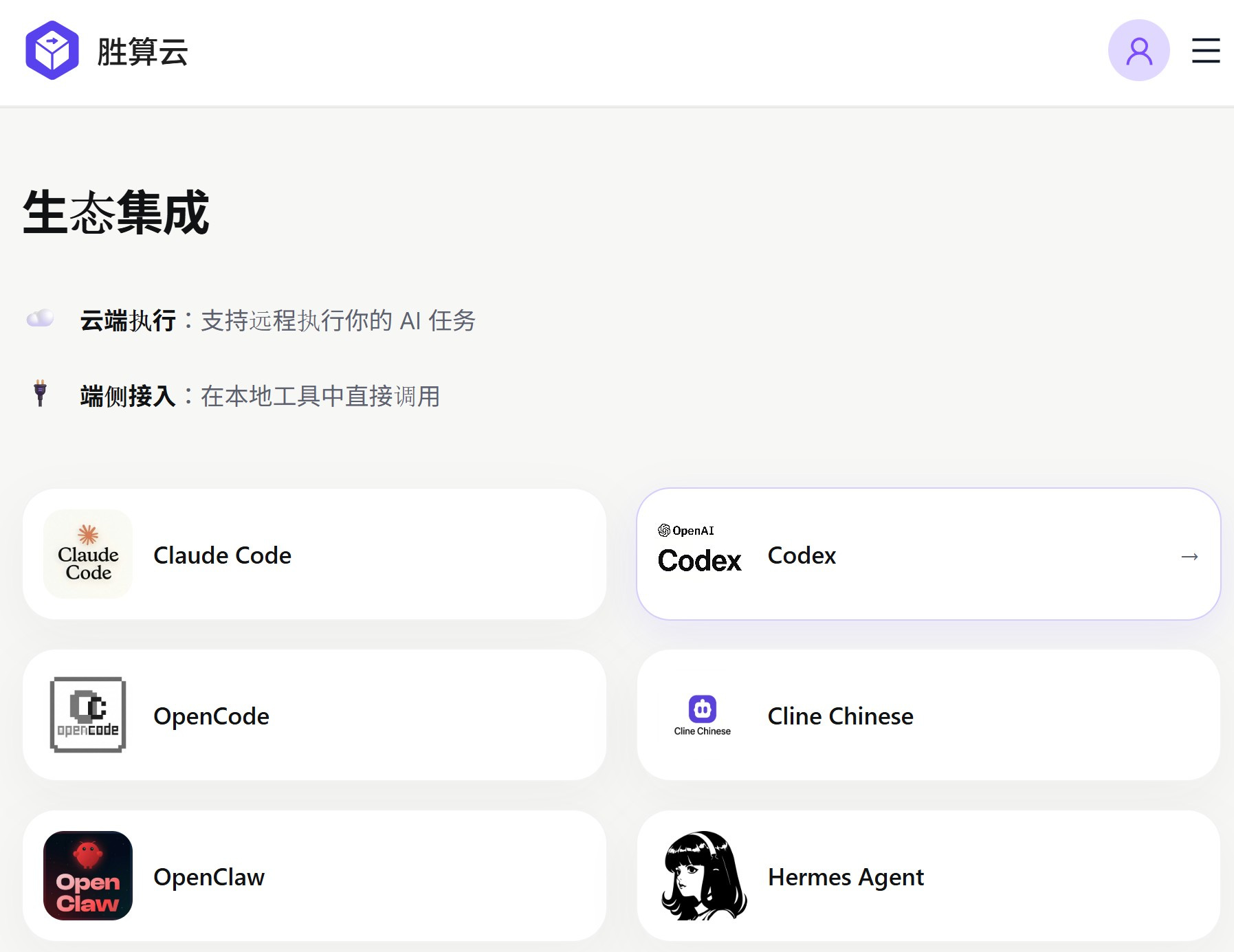
Transfer stations get around this by having a genuine non-Chinese connection. Situated in Singapore, Malaysia, or even the US, they open up API access directly to Anthropic or OpenAI with little trouble. They then offer Chinese consumers access, with local billing in Chinese yuan via AliPay, WeChat Pay, e-CNY, cryptocurrencies, and even Apple Gift Cards. Hence, the transfer station links the two sides.
Pulling Wool
An interesting quirk of the Chinese model is that transfer stations offer access to US models at crazy big discounts. The method is ridiculously simple — like forehead-slappingly “why didn’t I think of that?” simple. OpenAI, Anthropic and Google are so desperate to get people onto their platforms that they give away time-limited freebies. Transfer stations exploit these vouchers — a phenomenon known among consumers as “pulling wool” (薅羊毛) — to open accounts en-masse and then cycle through them as they expire.
US service providers offer other ways to game the system. Microsoft, for example, gives discounts of as much as 75% if you batch your queries to OpenAI for a reply sometime in the next 24 hours. There’s also discounts for tokens already created and served up previously by the AI model. Meanwhile, unlimited plans offered by Anthropic and their ilk allow transfer stations to spread the cost over hundreds of their individual customers.
Cache Distillation
Then there’s caching, header-swapping, and other dubious schemes. By saving queries submitted by Chinese users and the response from the US provider, transfer stations can build their own model, a form of distillation which I call “Cache Distillation.” They can then dish up the same response next time a different user asks a similar question, with the legitimate claim that it came from ChatGPT or Claude.
More nefarious though is header-swapping. A provider sends the query to a cheaper local model, such as DeepSeek, or a lower-spec version of the same US model, then returns the reply with a claim (via the data header) that it was delivered by the premium alternative.
The fact that new players like Justin Sun-backed B-AI are entering the market while hundreds of other providers have been thriving for years tells you something about the Chinese AI market. This kind of arbitrage is only possible because Chinese users consistently see US models as a preferred choice over local options.
And this view is not just prevalent among everyday consumers. Upper echelons of the Chinese government also want access to the best America has to offer.
Mythos Envy
Last month, a Chinese think tank asked Anthropic directly for access to its powerful new artificial intelligence model, insisting the startup change its stance on curbing availability to Beijing, the New York Times reported on May 12. The answer was no, the newspaper reported.
“A senior US official said AI and cybersecurity were high on the agenda with Beijing, noting concerns with ‘the latest models of AI,’” the NYT wrote. While it wasn’t clear exactly which model the Chinese think tank wanted, the newspaper hinted that they were talking about Anthropic’s unreleased Mythos, billed as so powerful that “it was skilled at finding software vulnerabilities and could cause a cybersecurity reckoning.”
With Nvidia’s Jensen Huang in tow, and in light of Trump’s previous reversal on banning chip sales to China, there’s no telling what concessions the US president will offer to Xi Jinping during his visit.

Perhaps he’ll keep acceding to Huang’s wish to let some Nvidia chips remain on sale in China, and at the same time placate hawks back home by formally curbing Chinese access to US models.
Even though China decided it would regulate the import of Nvidia’s H200 chip soon after Washington lifted a ban on shipments to the country, Beijing has not formally banned access to American AI models. Instead, it limits usage through virtual curbs such as putting them outside the Great Firewall and regulating usage through censorship laws. This is the same tactic used to push Google and Facebook out of China more than a decade ago.
It’s also the same loophole which transfer stations are exploiting, and it’s a tactic that Beijing is well aware of. In fact, it follows China’s own track record of allowing access to, and development of, innovative technologies to further the nation’s progress and then yanking that availability when it feels the time is right.
As a result, this quasi-legal status of US models in China allows local developers to leverage superior foreign models, without legitimizing them or giving American AI providers true access to its market. And they can be shut out at any time for any reason — or no reason — just by enforcing existing regulations.
With AI safety on the agenda this week, we might expect Washington and Beijing to pen some kind of watery agreement to “not do evil” and “keep talking,” but it’s in neither Xi’s nor Trump’s interests to truly shutdown the flow of tokens between their nations.
In fact, the grey market may be just what the US president wants. His family’s World Liberty Financial just announced “World Router,” the company’s entry into the transfer-station business. That could incentivize Trump to back a ban on US models in China, while leaving the door open for transfer stations to keep doing business. Xi would surely approve, unless China one day catches up in which case these transfer stations will no longer be needed.
Thanks for reading.


