


Good Evening from Taipei,
Apple is in talks with suppliers to handle a massive dilemma posed by sales of its MacBook Neo that have surpassed expectations, I am told. The question they must answer, and soon, is whether to boost production of the hit laptop, or let their inventory of parts run out, my sources tell me.
MacBook Neo comes in four colors and two configurations, but each model runs on the same processor: the A18 Pro. That’s the chip used in the previous generation’s iPhone 16 Pro, whereas the latest device uses the A19 Pro chip.
But as Ben Thompson at Stratechery astutely observed, the MacBook Neo doesn’t use fresh batches of A18 Pro chips, they’re leftovers from the original production run.
The MacBook Neo actually only promised 5 GPUs — the A18 Pro in the iPhone 16 Pro had 6 GPUs — which is to say that Apple is binning those chips as well: some number of A18 Pros with defects on just one of the GPUs are going into the Neo — You could make the case that some number of these chips are effectively free for Apple!
— Ben Thompson, Stratechery, 9 March 2026
MacBook Neo was designed around useable but leftover chips which would otherwise have been scrapped — remember, Apple are the masters at recycling! But with MacBook Neo being insanely popular, the stock of those binned chips will run out before demand gets satisfied.
Prior to the dilemma posed by this runaway success, Apple was only planning to have suppliers build a new Neo next year, powered by the current generation of binned A19 Pro chips, I am told.
Final assembly of the MacBook Neo is evenly divided between Quanta and Foxconn at factories in Vietnam and China, and the initial plan was to build around 5 to 6 million units before calling it a day, I am told. Right now, suppliers are unsure whether to expect production to continue beyond the original plan.
Leaving all that demand on the table is a painful prospect for Apple executives, but going back for another round would risk killing the sweet profit margins it enjoyed on making a device with “effectively free” chips.

MacBook Neo’s A18 Pro was — past tense — built on TSMC’s 3nm process (N3E). That node is now hugely popular and effectively sold out. Apple could, in theory, beg TSMC CEO CC Wei for a few hot lots — paying a premium to jump the queue — but that would almost certainly kill profits on the low-cost laptop. Alternatively, it could crib from its own wafer allocation originally planned for other devices, but the cost would still be higher than what it paid for the first batch of A18 Pro wafers (and infinitely higher than “free”).

Then there’s the matter of buying more aluminum — whose cost is rising — not to mention DRAM and NAND storage. Apple has a certain amount of power to get aluminum and memory at less-crazy prices than the rest of the industry, but one place their leverage is waning is at TSMC.
Neo Dilemma
Whatever happens — and to be clear, this next part is my analysis not what my sources tell me — Apple’s decision comes with compromises. If they do proceed with a fresh order, including asking TSMC for 10,000 to 30,000 wafers of A18 Pro yielding around 2.3 million to 7 million dies,1 then it will most likely need to raise prices of the MacBook Neo. And it would need to turn off the extra GPU core (of top-bin dies) so all Neos are created equal (theoretically, it could sell a 6-core GPU Neo — call it Neo Ultra — but I don’t see that happening).
One way to do deal with the higher cost would be to kill the cheaper 256GB model ($599) and only sell the one with 512GB of storage ($699). This wouldn’t entirely solve the margin shrink, but may mitigate it. Another approach would be to offer some new colors — I think (Product) RED would work well here — throw in some generous iCloud storage for free, raise the price, and thus preserve the margin.
Right now, the standard iCloud bundle is 5GB free. Giving away 200GB for one year, currently priced at $2.99/month, would follow Apple’s strategy of offering Apple TV+ for those who bought a new device. This is both an incentive to buy the product, and also a way to hook customers in the hope they’ll pay once the free period expires.
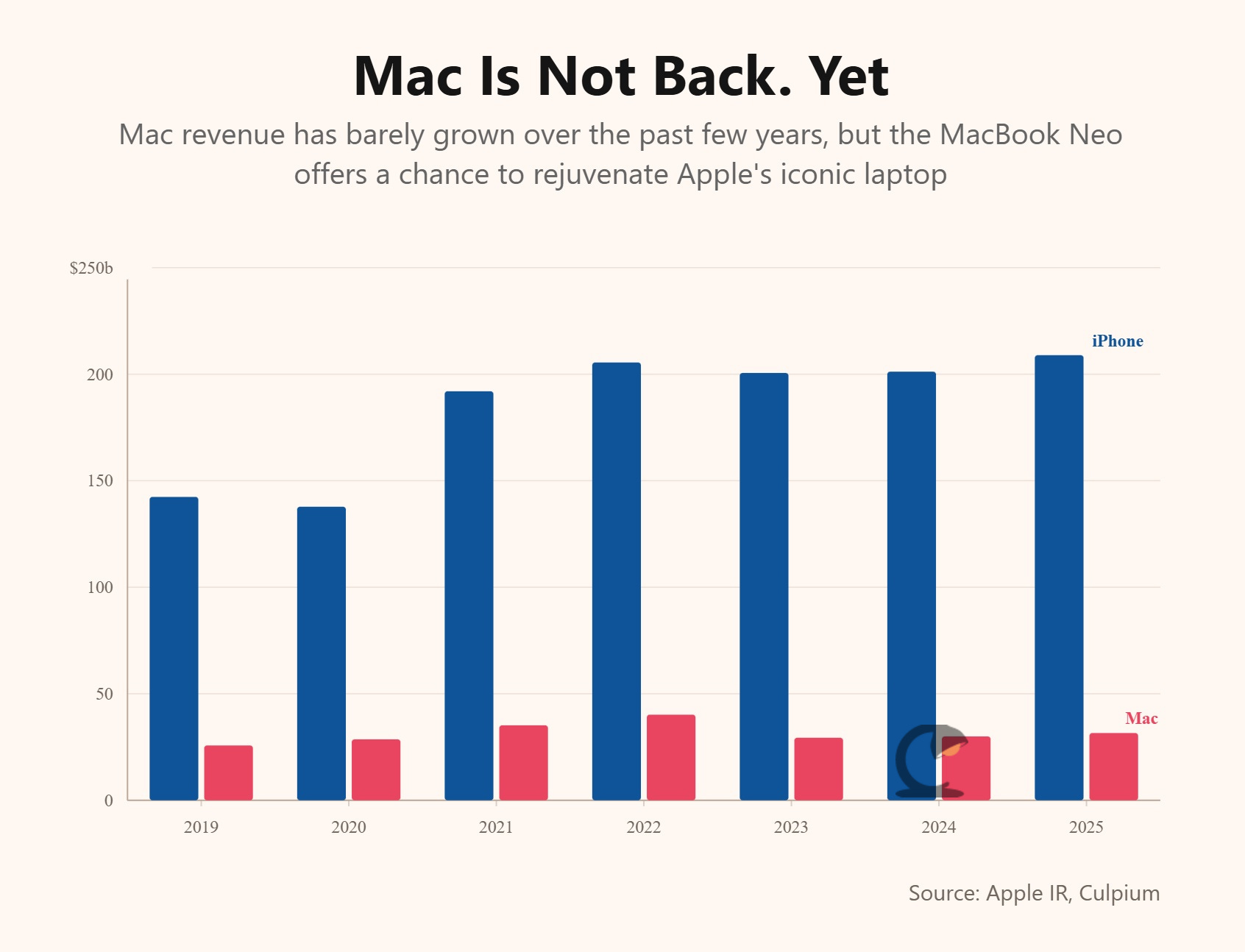
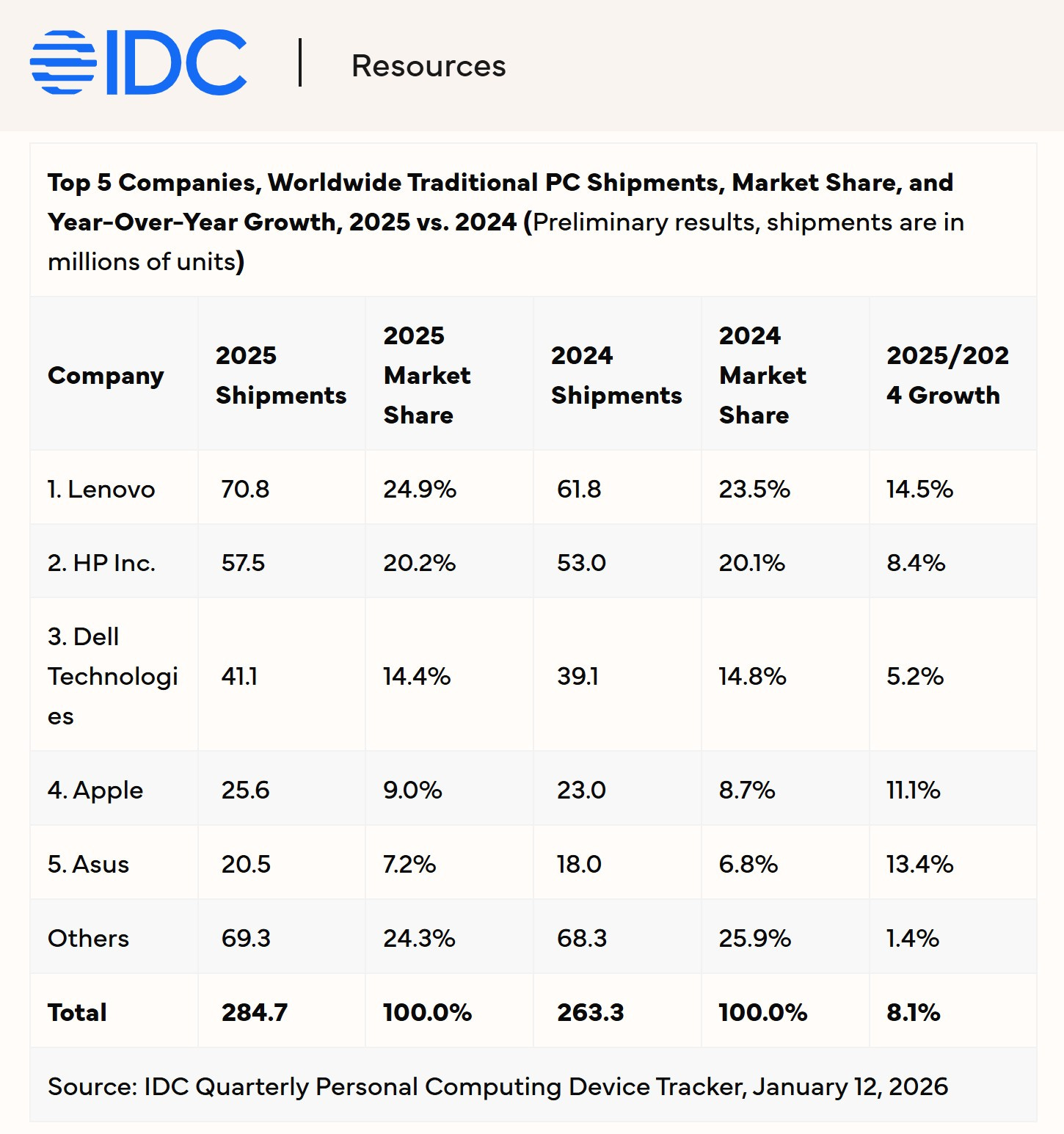
But there’s a bigger strategy Apple ought to consider here, and probably are: Getting more consumers hooked on Mac. To date, Mac has largely been an elite product for a niche group of customers by virtue of its high price tag, keeping market share at around 10%. This group is dominated by two categories of user: designers, and coders.
Unfortunately for both, AI threatens to decimate their industries. Furthermore, AI is doing this design & code work in the cloud. High-powered personal computers just aren’t needed when you can do video editing, compile code, or crunch data on a lower-spec laptop with an internet connection.
Coincidentally or deliberately, MacBook Neo is just that: a lower-spec laptop with an internet connection. Concerns that Neo could cannibalize sales of premium devices like MacBook Air and Pro are fully justified. But only in the short-term. In the long run, Neo will likely steal customers from Windows PCs, broadening the Mac ecosystem. As more enterprise software gets run from the cloud, Mac will in turn become a more viable option for corporations otherwise stuck with legacy software tied to Windows.
I also think the Neo will have a shorter replacement cycle, akin to the two-to-three-year interval between iPhone purchases, than the longer five-to-seven-year cycle for items like MacBook Air.
The Stocking Strategy
Twenty years ago, the most common default gift for the festive and back-to-school seasons was the iPod. It was a risk-free item that anyone would love to get, but not so expensive that either the giver or receiver would feel uncomfortable. The iPhone doesn’t quite fit that bill, partially because phones are usually tied to a telecom subscription. The low price of Neo makes it a viable stocking stuffer.
Furthermore, the high price, low supply, and production problems — h/t Lauly Li & Cheng Ting-fang at Nikkei — for the forthcoming iPhone Fold make Apple’s most epic product launch in over a decade unlikely to be an easy win. The Neo, especially given its array of exciting colors, has a much better chance of bringing new buyers into the MacOS ecosystem. But only if Apple ponies up for more components.
Thanks for reading.
More from Culpium:


This is my calculation based on this Chipwise teardown and the die-per-wafer calculator from Silicon Edge.
If I were Apple, I would do the following:
1. Get rid of the 256GB base model
2. Put in enough orders at TSMC to last until the end of August
3. Release Neo 2 early (Fall 2026). Only one model (the 512GB model with TouchID)
"The low price of Neo makes it a viable stocking stuffer."
You might be a bit out of touch with this comment... $599 to $699 is still a lot of money for most people!