

TSMC's N2 Node is Almost Booked Out for the Next Two Years
[Exclusive] Clients are being asked to finalize their requirements into mid 2027, with larger customers already booking capacity over the next two to three years.

Good Morning from Taipei,
TSMC is urging clients to apply for N2 production allocation as far out as the second quarter of 2027, with large allotments of capacity close to sold out for the next two years, my sources tell me. Bookings are still available but this lengthening lead time, which may soon extend to six quarters, is making it hard for chip designers to commit to their own roadmaps, I am told.
Equity analysts, including those at Deutsche Bank and JPMorgan, previously noted that N3 is sold out well into 2027, according to media reports from WallStreet CN, Digitimes, and the Commercial Times.
Culpium is the first to report that N2 is now close to facing the same level of capacity constraint well into next year and beyond. TSMC’s N3 node was launched in 2022 with revenue from the technology almost doubling last year to $25 billion. N2, on the other hand, hit volume production only in the past six months. Apple is the first customer and is initially using the node for chips that will go into its upcoming MacBook, I am told.

A newer variant called N2P will offer a 5% performance bump for the same power and will be in volume production in 2H 2026, as will TSMC’s A16 node focused on high-performance computing chips, CEO CC Wei told investors last month.
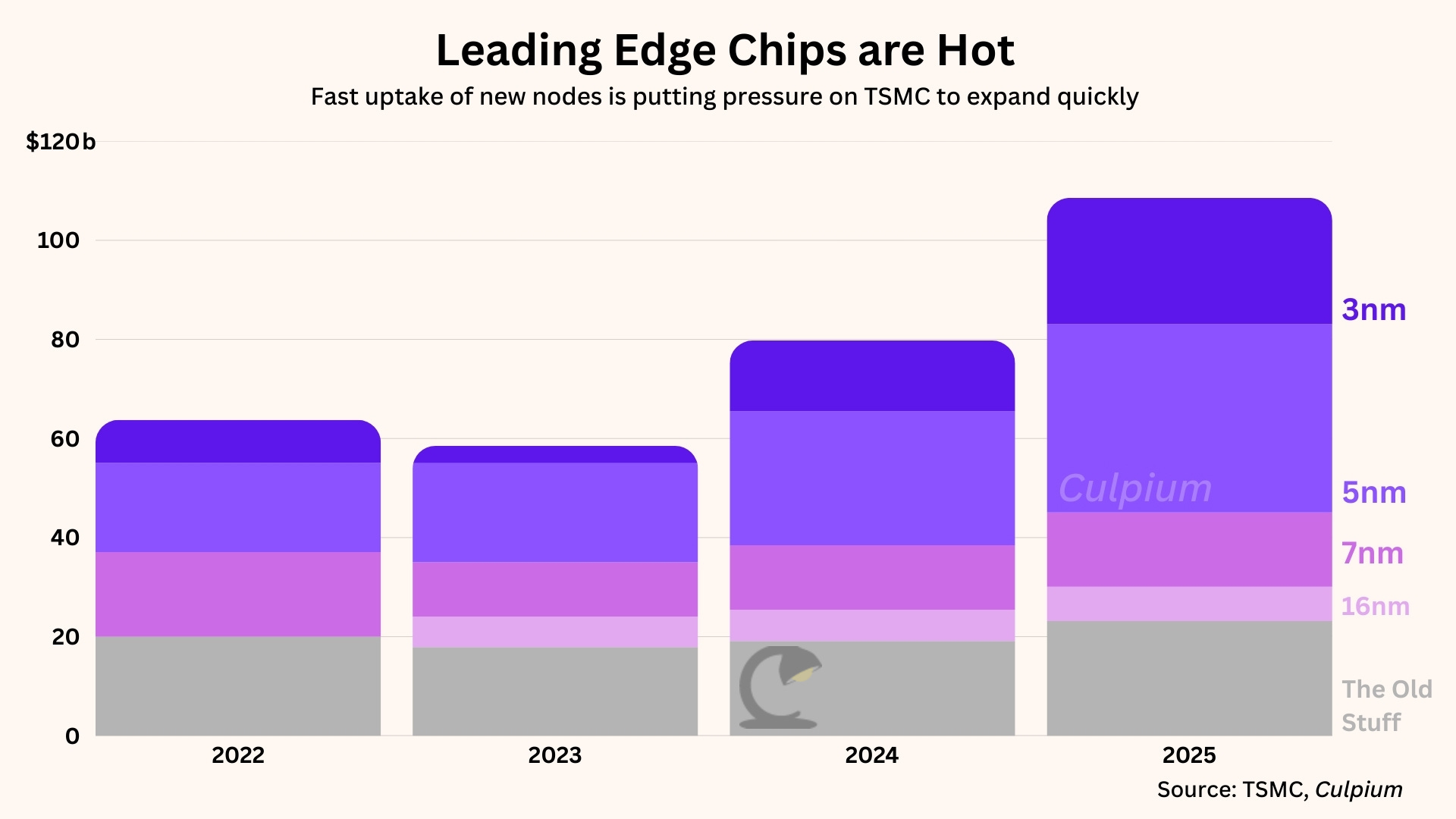
Competition for TSMC production has long been a part of working with the world’s largest chipmaker. This struggle came to light during the Covid pandemic when car makers were caught short. The current situation, however, is more acute than ever, I am told. A confluence of factors is exacerbating the challenge, including the larger footprint taken up by AI GPUs, their higher price tag making clients less likely to baulk at the escalating rates being charged by TSMC, and the AI arms race being waged by startups and hyperscalers.
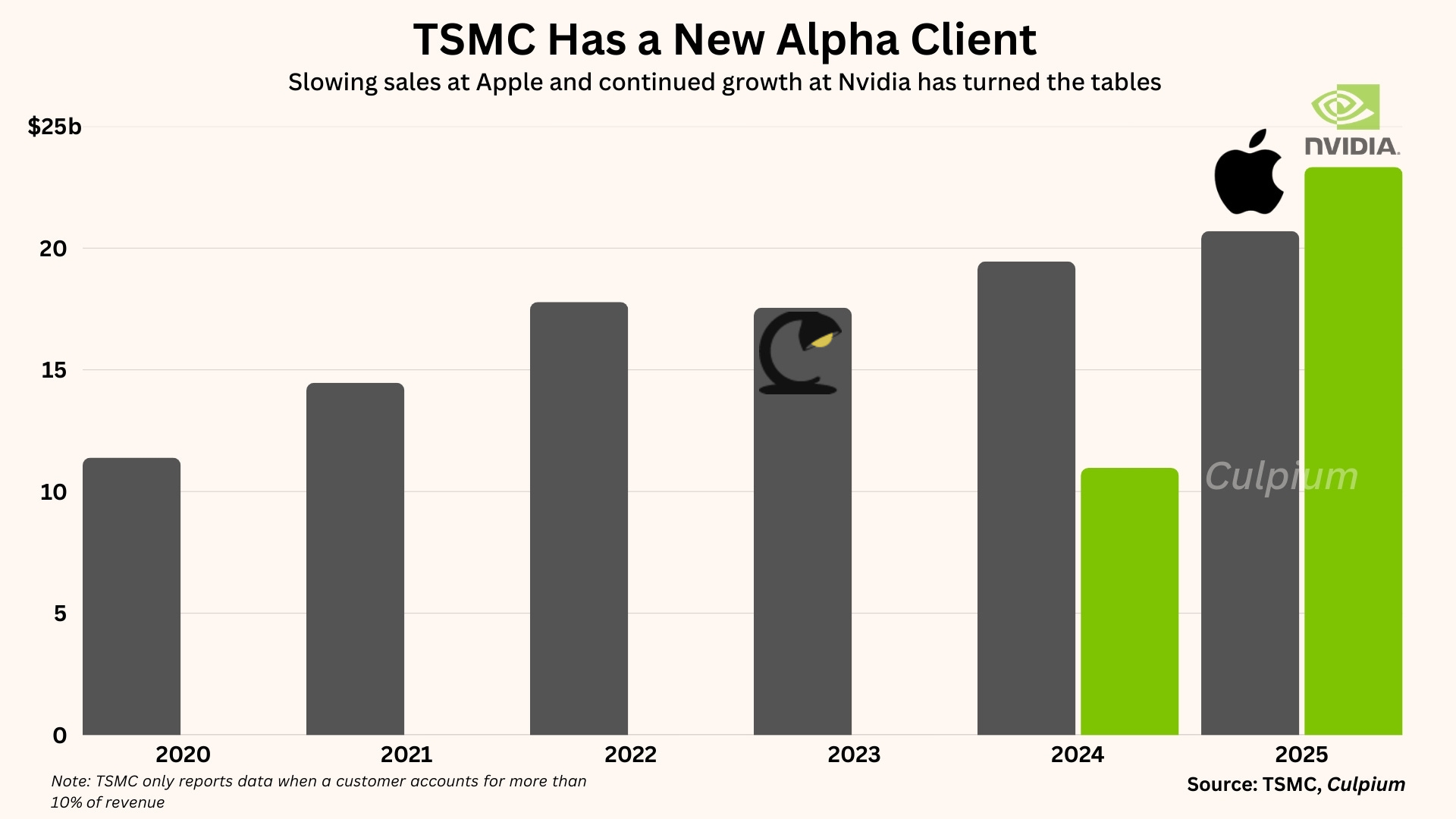
Culpium last month reported exclusive details of the changing leaderboard among TSMC’s largest clients — Apple and Nvidia — with sources telling me that the Green Machine likely pipped the Cupertino Cult as the foundry’s largest customer for at least a few quarters of 2025.

That’s indeed what happened — across the entire year. Data recently published by TSMC shows that Nvidia’s procurement more than doubled in 2025 to $23.3 billion, ahead of Apple’s at $20.7 billion, according to Culpium analysis.
TSMC typically asks clients to notify them how many wafers will be needed each quarter, the company then plans its capacity allocation and lets customers know what they’ll get. Buyers are then asked to pay for that capacity, locking in production schedules.
This latter deadline is now around six months out from the start of manufacturing, with fabrication and packaging then taking around four to six months. That means chip designers must decide on their needs as much as 12 months before they’d take delivery of the chips.
There are exceptions to this timeline, including last-minute requests called hot lots (aka hot runs) which attract large premiums and aren’t guaranteed. But these capacity constraints and lengthening lead times are causing growing uncertainty among downstream clients in computing, networking, and consumer electronics.
Nvidia this week gave hints about its own appetite — past, present and future — after reporting a 65% rise in full-year revenue to $216 billion.
“We believe we have inventory and supply commitments in place to address future demand, including shipments extending into calendar 2027,” CFO Colette Kress told investors during Nvidia’s investor call on Wednesday. “While we don’t use the term ‘sold out’ for 2027 yet, our visibility is better than it has ever been. Our customers are giving us multi-year roadmaps because they know that if they don’t secure the capacity now, they will be left behind in the agentic AI race.”
To ameliorate the problem, TSMC announced last month it will include N3 at its facility in Kumamoto, Japan. Last year, it added a third phase at Arizona which will make wafers at N2 and A16. That new fab is expected to hit volume production at the end of the decade. More factories are planned for the US site, as well as new facilities being added in Taiwan.
Thanks for reading.


